Table of Contents
- The Simplest Haircut in the City, Explained Properly
- What the Guard Numbers Actually Mean
- What Each Length Looks Like
- The #1 Buzz Cut
- The #2 Buzz Cut
- The #3 Buzz Cut
- The #4 Buzz Cut
- Buzz Cut Variations
- Same Length All Over
- Buzz Cut With a Fade
- Buzz Cut With a Lineup
- The Crew Cut and the Crop
- What a Buzz Cut Costs in NYC in 2026
- How Often to Get a Buzz Cut
- How to Ask for a Buzz Cut
- Does a Buzz Cut Suit You?
- Buzz Cut vs Skin Fade vs Shaved Head
- Buzz Cut Mistakes Barbers See Every Week
- Buzz Cut Aftercare
- Buzz Cuts for Kids
- Get a Buzz Cut in the East Village
- Frequently Asked Questions
- What is the most popular buzz cut length?
- How much does a buzz cut cost in NYC?
- How often should I get a buzz cut?
- What is the difference between a #1 and a #2 buzz cut?
- Is a #3 or a #4 still a buzz cut?
- Can I walk in for a buzz cut at B & H Barber Shop?
- Should I get a buzz cut if my hair is thinning?
The Simplest Haircut in the City, Explained Properly
The buzz cut is the one haircut everybody thinks they understand and most people get slightly wrong, usually by asking for a number that is not the length they wanted. This guide, from the barbers at B & H Barber Shop on Avenue A in the East Village, covers what the guard numbers mean in actual inches, what each one looks like a day after and three weeks after, what a buzz cut costs in New York in 2026 and why, how often to get it recut, and what to say in the chair so the cut matches the picture in your head.A buzz cut is a single-length clipper cut over the whole head. In the US guard system, a #1 is an eighth of an inch (3 mm), a #2 is a quarter inch (6 mm), a #3 is three eighths (10 mm) and a #4 is half an inch (13 mm). A buzz cut in NYC costs about $25 to $40 at a barber shop in 2026; at B & H Barber Shop, 60 Avenue A, East Village, it is $30. Most people recut a buzz every three to four weeks, every two weeks for a #1. Walk-ins are welcome and the shop is open Sunday.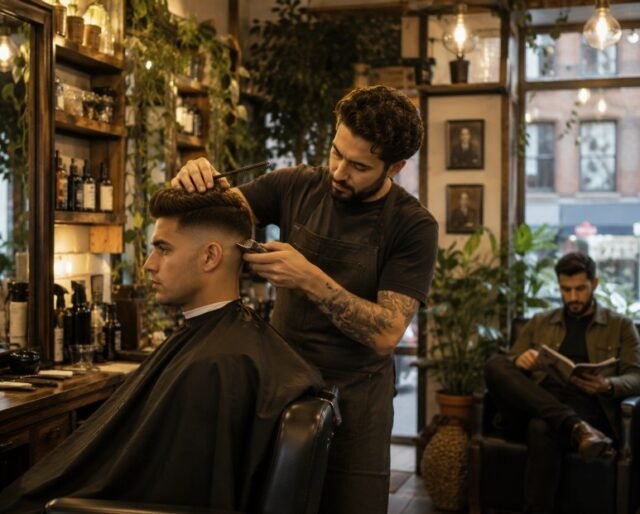
What the Guard Numbers Actually Mean
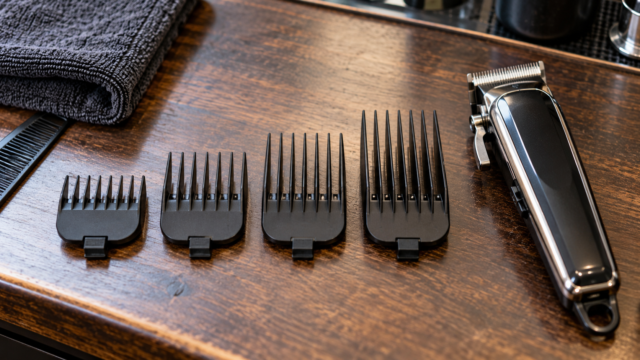
Clipper guards are plastic combs that snap over the blade and hold the hair at a fixed distance, so every hair under the guard is cut to the same length. The numbers are a convention, not a standard, and they vary slightly between brands, but the common US sizing is:#0 (no guard): about 1/16 inch, 1.5 mm. Stubble, the skin visible, the length a skin fade blends up from. Not usually called a buzz cut on its own.#1 guard: 1/8 inch, 3 mm. Very short; the scalp shows through under light, the hair reads as a shadow more than a texture. Military length.#2 guard: 1/4 inch, 6 mm. The most popular buzz cut length in the city. Short, clean, the scalp shows only at the hairline and crown, enough hair to have a color.#3 guard: 3/8 inch, 10 mm. A buzz with some body to it; the hair lies in a direction, the scalp does not show, and it looks like a very short haircut rather than a shave.#4 guard: 1/2 inch, 13 mm. The longest length most barbers still call a buzz cut. Looks like a short crop, can be brushed, hides the scalp completely.Above a #4 (a #5 at 5/8 inch, a #6 at 3/4, a #7 at 7/8, a #8 at one inch) the cut stops being a buzz and starts being a crop or a crew cut with the sides faded, which the shop covers on its fade haircuts in East Village NYC page.A barber's rule of thumb: each guard number is roughly an eighth of an inch. If you want to picture a #3, imagine the thickness of three stacked quarters.What Each Length Looks Like
The #1 Buzz Cut
A #1 is the shortest buzz most people choose on purpose. Day one, the head is clean and the hairline is sharp; the scalp is visible all over, more so under direct light. Week two, it has grown to roughly a #2 and looks like a #2. Week three, it is a #3 and starting to need a recut. A #1 suits a well-shaped head, a strong jaw, a thick beard for balance, and anyone who wants the lowest possible maintenance. It is also the honest answer for a receding or thinning hairline, since at a #1 the difference between thick and thin hair almost disappears.The #2 Buzz Cut
The city's default. Day one, short, neat and clearly a haircut rather than a shave; the hair has color and a faint direction, the scalp shows only where the hair is finest. Week two, grown to about a #3 and still looks sharp. Week three, a #4 and soft at the neckline. Week four, needs a recut. A #2 is the length to ask for if you have never had a buzz cut, because it is short enough to be the real thing and long enough to recover from if you hate it.The #3 Buzz Cut
A #3 has texture. Day one, the hair lies down, the scalp does not show, the cut reads as a very short crop. It is the buzz for anyone who wants short without wanting the scalp on display, and it suits a wider range of head shapes because it keeps a little softness over the crown and the occipital bone at the back. Week three it is a #4 and a half, and the sides start to fluff over the ears; a recut at three to four weeks.The #4 Buzz Cut
A #4 is the longest buzz, and some barbers would call it a crop. Day one it can be brushed, it has weight, and the scalp is hidden. It is the length for someone who wants a low-maintenance cut that still looks like hair, or who is growing out from a shorter buzz and wants a stop on the way. By week four it is a short regular haircut and needs either a recut or a decision to keep growing.
Buzz Cut Variations
Same Length All Over
The induction cut: one guard, every direction, whole head. The purest buzz, the fastest to cut, the easiest to maintain. The only decision is the number.Buzz Cut With a Fade
The most common upgrade. The top is buzzed at a #2, #3 or #4 and the sides are faded down to a #1, a #0 or skin. It keeps the buzz cut's simplicity on top and adds the clean, graduated sides of a fade, which is why most buzz cuts in New York barbershops are actually buzz-and-fade cuts. At B & H a fade is $32 against the $30 buzz, so the fade version costs a couple of dollars more; the skin fade in East Village NYC page shows what the sides look like taken to skin.Buzz Cut With a Lineup
A buzz with the hairline, temples and neckline edged sharp with a trimmer or razor. A lineup makes a buzz look deliberate, especially at a #1 or #2 where the hairline is the most visible feature. It also grows out the fastest, since the edge softens in about ten days.The Crew Cut and the Crop
Slightly longer on top, a #4 to #6, with the sides faded or tapered and the front sometimes left a touch longer. Not quite a buzz, but the cut most buzz clients graduate to when they want a little more. The shop's men's haircut in East Village NYC page covers the scissor-and-clipper cuts above buzz length.What a Buzz Cut Costs in NYC in 2026
A buzz cut at a Manhattan barber shop in 2026 runs about $25 to $40. Published prices in the East Village, Lower East Side, Midtown and Upper East Side cluster between $25 and $35, with a few shops at $37 to $40 and the occasional salon well above that. At B & H Barber Shop the buzz cut is a posted $30, the shop's least expensive adult cut; a fade is $32, a regular haircut $38 and a kids' cut $25, all on the services page.Why is a buzz cheaper than a regular cut? Time. A buzz is a ten to fifteen minute service with no scissor work and no blending beyond the neckline, so most shops price it below their standard haircut. Why is it not cheaper still? Because the chair, the barber and the cleanup cost the same whether the cut takes ten minutes or thirty, and because a good buzz is still a cut: the neckline has to be shaped, the ears and the crown have to be gone over against the grain, the lineup has to be straight.The cheapest buzz cut in NYC is the one you do at home, and the second cheapest is the one you do at home and then pay a barber $30 to fix. Home clippers are fine for maintaining a #3 or #4 between visits; the neckline and the back of the crown are where they fail, and the fix is a recut.
How Often to Get a Buzz Cut
Hair grows about half an inch a month, which is roughly one guard number every two weeks. So:A #1 looks like a #1 for about ten days and like a #2 by week two; the people who wear a #1 and want it to stay a #1 recut every two weeks.A #2 holds its look for two to three weeks and needs a recut at three to four.A #3 or a #4 holds for three weeks and needs a recut at four to five, mostly because the sides and neckline fluff before the top looks long.A buzz with a fade needs a recut on the fade's schedule, two to three weeks, because a fade grows out faster than a single-length cut; the skin line at the bottom softens in about two weeks regardless of what the top is doing.The practical answer for most New Yorkers: every three weeks, which at $30 is $520 a year for a haircut that never needs styling, product or a comb.How to Ask for a Buzz Cut
"Number two all over" is a complete instruction and the most common one in the shop. If you want the sides shorter: "number two on top, fade the sides to a one" or "to skin." If you want the hairline edged: "line it up." If you want the neckline square or rounded, say so; most barbers default to a natural or rounded neckline on a buzz. If you have never had a buzz and are nervous, ask for a #3 first; it can always go shorter in the same sitting and never longer. And if you want the barber's opinion on which length suits your head, ask. A barber who cuts buzz cuts all day has seen every head shape and knows which lengths flatter a flat crown, a prominent occipital bone or a widow's peak.Does a Buzz Cut Suit You?
The question everyone asks before the first one. Head shape matters more than face shape: a buzz shows the skull, so a rounded, even head looks best at any length, a flat back or a pronounced crown looks better at a #3 or #4 that keeps a little cover. Hairline matters next: a strong, straight hairline can take a #1 with a lineup; a receding hairline looks better at a #1 or #2 without a hard line, which makes the recession disappear into the overall shortness. Beards balance a short buzz; a #1 with a full beard is a classic for a reason. Glasses and strong brows do the same job. And a buzz cut is reversible in a month, which is the strongest argument for trying one.Buzz Cut vs Skin Fade vs Shaved Head
Three cuts that get confused, and three different services. A buzz cut is one guard length over the whole head, with the sides at the same length or faded. A skin fade is a haircut, of any length on top, with the sides taken to bare skin at the bottom and blended up; the top can be a buzz, a crop or a full scissor cut. A shaved head is a razor or a #0 with no guard over everything, no hair at all. If you want the sides to disappear but keep something on top, you want a buzz with a skin fade, not a shaved head. If you want the whole head at one length with no gradient, you want a buzz. The shop's taper vs fade vs skin fade guide separates the three fade terms if the sides are the part you are deciding on.Buzz Cut Mistakes Barbers See Every Week
Asking for a number without knowing what it is: the #1 that was supposed to be a #3 is the most common regret in the chair, and it takes a month to undo. Ask the barber to show you the guard before he starts.Doing it at home with the wrong guard: home clipper kits often use a different numbering, and a home #2 may not be a barber's #2.Skipping the neckline: a buzz with a shaggy neckline looks like it was grown out, not cut. The neckline is the part of a buzz that makes it a haircut.Going against the grain only once: a proper buzz goes over the whole head in at least two directions so the length is even over the crown, where the hair grows in a whorl.A hard lineup on a receding hairline: it draws a straight line where the hair is thinnest and makes the recession the first thing anyone sees. A natural hairline at a #1 or #2 does the opposite.Waiting too long between cuts: a #2 at week six is a short regular haircut with a fluffy neckline, and the recut takes longer and costs the same. Three to four weeks keeps a buzz looking like a buzz.Buzz Cut Aftercare
There is almost none, which is the point. Wash the scalp daily, since a buzz exposes it to the city; use a moisturizer or an SPF on the scalp in summer, since a #1 or #2 gives the sun a clear shot. A soft brush over a #3 or #4 keeps it lying in one direction. Touch up the neckline at home only if you can see it; most people cannot and should not. The shop stocks a small range of products listed on the products page for anyone who wants a scalp moisturizer or a brush.Buzz Cuts for Kids
A #2 or #3 buzz is the lowest-maintenance kids' cut there is, which is why so many East Village fathers bring their sons in for matching ones. B & H does kids' cuts at $25, and a buzz is usually the fastest of them; the kids haircut in East Village NYC page has the details.Get a Buzz Cut in the East Village
B & H Barber Shop, 60 Avenue A, New York, NY 10009, between East 4th and 5th Streets. Buzz cuts $30, walk-ins welcome, Monday to Thursday 9:30 am to 7:30 pm, Friday 9:30 am to 4 pm, Sunday 10 am to 7 pm, closed Saturday. Call (646) 896-1090, book through the contact page, or find the shop on its Google Business Profile. The barber shop in East Village NYC 10009 page has directions from every corner of the neighborhood. Say a number, sit down, be out in fifteen minutes.Frequently Asked Questions
What is the most popular buzz cut length?
A #2 guard, a quarter inch (6 mm). It is short enough to look like a buzz, long enough to keep hair color and hide most of the scalp, and holds its look for about three weeks. A #2 on top with the sides faded to a #1 or skin is the most common version in NYC barbershops.How much does a buzz cut cost in NYC?
About $25 to $40 at a barber shop in 2026, with most Manhattan shops posting $25 to $35. At B & H Barber Shop in the East Village a buzz cut is $30; a fade is $32.How often should I get a buzz cut?
Every two weeks for a #1, every three to four weeks for a #2, and every four to five weeks for a #3 or #4. A buzz with a fade needs a recut every two to three weeks because the fade grows out faster than the top.What is the difference between a #1 and a #2 buzz cut?
A #1 is an eighth of an inch (3 mm) and shows the scalp all over; a #2 is a quarter inch (6 mm) and shows the scalp only at the hairline and crown. A #1 grows into a #2 in about two weeks.Is a #3 or a #4 still a buzz cut?
Yes. A #3 (3/8 inch) and a #4 (1/2 inch) are the longest lengths most barbers call a buzz cut. Above a #4 the cut is usually called a crop or a crew cut, especially with faded sides.Can I walk in for a buzz cut at B & H Barber Shop?
Yes. Walk-ins are welcome and a buzz cut takes about ten to fifteen minutes. The shop is open Sunday 10 am to 7 pm and closed Saturday.Should I get a buzz cut if my hair is thinning?
A #1 or #2 buzz without a hard lineup is the most common barber's recommendation for a receding or thinning hairline, because at that length the difference between thick and thin hair nearly disappears and the recession blends into the overall shortness.