Table of Contents
- What Is a Taper?
- What Is a Fade?
- What Is a Skin Fade?
- Taper vs Fade vs Skin Fade: Side-by-Side
- So What's a Taper Fade? Clearing Up the Confusion
- How to Ask Your Barber for Exactly What You Want
- Which One Should You Choose? A 20-Second Decision Guide
- Getting It Cut in the East Village
- Frequently Asked Questions: Taper, Fade, and Skin Fade
- What is the difference between a taper and a fade?
- What is the difference between a fade and a skin fade?
- What is a taper fade?
- What's the difference between a low, mid, and high fade?
- Which is more professional, a taper or a fade?
- How often do you need a haircut to maintain a fade?
- Does a skin fade work with every hair type?
- Should I get a fade if I'm growing my hair out?
- What should I show or tell my barber to get the right fade?
- Where can I get a good fade or skin fade in the East Village?
A taper gradually shortens the hair only at the neckline and around the ears, keeping the sides mostly intact, it's the subtle, conservative option. A fade takes the sides and back much shorter, blending from longer hair on top down to very short hair below, with visible contrast. A skin fade pushes that all the way: the hair fades down to bare skin at the bottom for the sharpest, highest-contrast finish. In short: taper = cleanest natural look, fade = modern contrast, skin fade = maximum sharpness (and the most frequent upkeep). If you're not sure which suits you, any experienced barber can decide with you in the chair in under a minute, at B & H Barber Shop in the East Village, that conversation is the first step of every cut.Ask five people what a "taper fade" is and you'll get five answers, which is exactly why so many men walk out of a barbershop with a cut they didn't quite ask for. The terms overlap, barbers in different shops use them slightly differently, and the internet has blurred them further. This guide sorts it out in plain English: what each cut actually is, how they differ in maintenance and vibe, which one fits your situation, and, most usefully, the exact words to use in the chair so you get precisely what you want.


What Is a Taper?
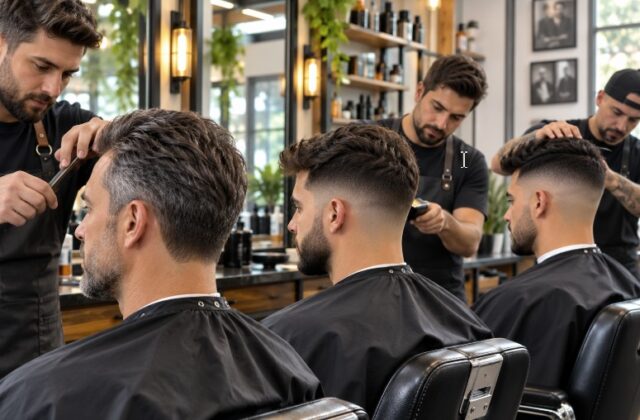
A taper is the most traditional of the three. The hair gradually gets shorter only in two zones: at the neckline and around the ears. The rest of the sides and back keep real length, and the transition is soft and gradual, no hard lines, no exposed scalp.The look: clean, natural, professional. A taper reads as "well-groomed" rather than "styled." Nobody in a boardroom will register it as a statement, which is precisely the point.Best for: men who want tidy without contrast; conservative workplaces; longer styles on top (side parts, pompadours, scissor cuts) where dramatic sides would fight the shape; and anyone growing their hair out who still wants to look intentional between stages.Maintenance: the most forgiving of the three. Because the change is subtle, a taper grows out gracefully and can stretch 3–5 weeks between visits, or stay crisp with a quick line up between full cuts.What Is a Fade?
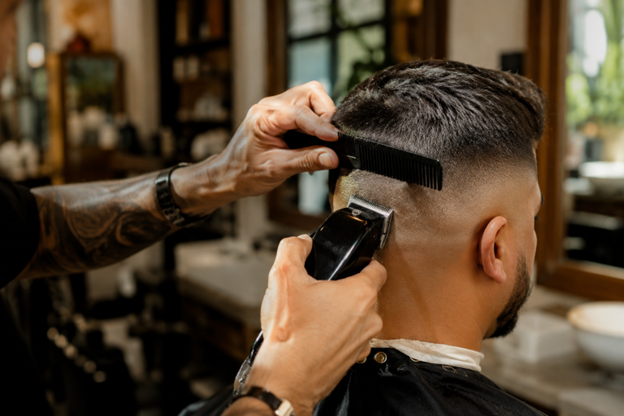
A fade takes the sides and back significantly shorter than a taper and blends them upward into the longer hair on top, a smooth gradient from short to long that covers the entire side of the head, not just the edges. The defining feature is contrast: the top clearly reads longer, the sides clearly read shorter, and the blend between them is seamless.Fades are then described by where the shortest point sits:- Low fade, the fade begins just above the ears and neckline. Subtle contrast; the closest cousin to a taper.
- Mid fade, begins at the temples, around the middle of the head. The modern default: noticeable but versatile.
- High fade, begins high on the sides, near the top. Maximum contrast and the boldest silhouette.
What Is a Skin Fade?
A skin fade (also called a bald fade or zero fade) is a fade taken to its logical conclusion: at the lowest point, the hair is shaved down to bare skin, then blended upward through clipper lengths into the top. It delivers the cleanest, sharpest, highest-contrast finish a haircut can have, the kind of cut that looks freshly done because, visibly, it is.The look: maximum sharpness. Crisp outlines, a gradient that catches the light, and an unmistakably fresh-from-the-shop finish. Skin fades dominate modern short styles and look especially strong with textured crops and defined line-ups.Best for: men who want the sharpest possible finish and are willing to maintain it; dense or coarse hair that benefits from tight sides; and anyone pairing the cut with a sculpted beard, where skin at the fade's base creates a clean canvas.Maintenance: the highest of the three. Because skin regrowth shows within days, a skin fade is at its best for roughly 1.5–3 weeks. It's a commitment, the trade-off for the sharpest look on the menu. Everything else you'd want to know is in our dedicated skin fade in East Village guide.Taper vs Fade vs Skin Fade: Side-by-Side
| Taper | Fade | Skin Fade | |
| Where it happens | Neckline + around ears only | Entire sides and back | Entire sides and back, down to skin |
| Shortest point | Short, but hair remains | Very short (low guard) | Bare skin |
| Contrast level | Subtle | Medium–high | Maximum |
| Vibe | Classic, professional | Modern, versatile | Sharp, statement |
| Works with | Longer classic styles, grow-outs | Almost every modern style | Short textured styles, defined beards |
| Grows out | Gracefully | Noticeably by week 3 | Noticeably by week 2 |
| Visits to stay sharp | Every 3–5 weeks | Every 2–3 weeks | Every 1.5–3 weeks |
| Office-conservative? | Always | Low/mid: yes | Depends on the office |
So What's a Taper Fade? Clearing Up the Confusion
Here's where most of the mix-ups happen. Strictly speaking, a taper fade is a low fade concentrated in the taper zones, the neckline and around the ears, taken shorter than a classic taper but not sweeping the whole side of the head. In practice, though, many people (and many barbershops) use "taper fade" loosely to mean any low, subtle fade.The lesson isn't to memorize competing definitions, it's that terminology varies, so describe the outcome, not just the name. Which brings us to the most useful section of this guide.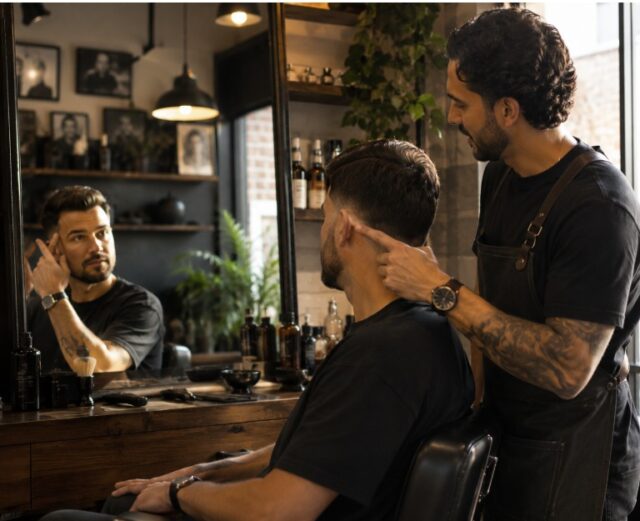
How to Ask Your Barber for Exactly What You Want
Whether you're at B & H or any good shop, these four pieces of information guarantee you and your barber are picturing the same haircut:- Name the family, then the details. "A mid skin fade" or "just a taper, keep the sides" gets you 80% there. Don't worry about perfect terminology, that's what the next three steps are for.
- Point to where the shortest point should start. Touch the spot on your own head. This single gesture resolves the low/mid/high question better than any word can.
- Say what happens at the bottom. "Down to skin" vs. "short but not skin", this is the taper/fade/skin-fade fork in one sentence.
- Show a photo. One good photo of a similar hair type ends all ambiguity. Every barber prefers a photo to a paragraph.
Which One Should You Choose? A 20-Second Decision Guide
- Choose a taper if: you want clean and classic, wear longer styles on top, work somewhere conservative, or want the longest stretch between visits.
- Choose a fade (low or mid) if: you want a modern look that works everywhere, pairs with almost any style on top, and you're fine with a cut every 2–3 weeks.
- Choose a high fade or skin fade if: you want maximum sharpness, you keep short textured styles, you're pairing it with a defined beard, and the chair schedule doesn't scare you.
- Still torn? Start with a mid fade. It's the most reversible decision on the menu: subtle enough for any setting, modern enough to feel like a change, and it grows into everything else.
Getting It Cut in the East Village
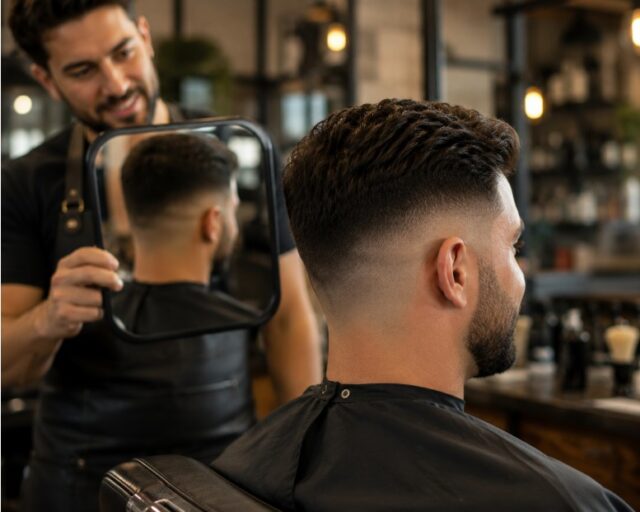
Every cut in this guide, tapers, low to high fades, skin fades, and everything on top, is daily work at B & H Barber Shop, 60 Avenue A, New York, NY 10009, at the corner of East 4th Street in the East Village. The shop has spent 15+ years cutting the neighborhood, with hand-picked barbers trained across classic and modern styles, and the first minute of every appointment is exactly the conversation described above: what do you want, where should it start, and what happens at the bottom.Walk-ins are welcome; you can also book online at bhbarbershop.com or call 646-896-1090. Hours: Monday–Thursday 9:30 am–7 pm, Friday 9:30 am until two hours before sunset, closed Saturday, Sunday 10 am–7 pm. New to the neighborhood? Our guide to finding the right barber shop in the East Village covers what to look for in any shop, including ours.Frequently Asked Questions: Taper, Fade, and Skin Fade
What is the difference between a taper and a fade?
A taper shortens the hair only at the neckline and around the ears, keeping real length on the sides, while a fade blends the entire sides and back from very short at the bottom to longer on top. The practical difference is contrast: a taper is subtle and classic, a fade is visibly modern.What is the difference between a fade and a skin fade?
Both blend the sides from short to long, the difference is the bottom. A regular fade stops at a very short clipper length, while a skin fade goes all the way down to bare skin, creating the sharpest possible contrast and the freshest-looking finish.What is a taper fade?
Strictly, a taper fade is a low fade concentrated at the neckline and around the ears, shorter than a classic taper but not covering the whole side of the head. In everyday use, many people say "taper fade" for any subtle low fade, which is why describing where you want the shortest point matters more than the term itself.What's the difference between a low, mid, and high fade?
The name refers to where the shortest point begins: a low fade starts just above the ears and neckline (most subtle), a mid fade starts around the temples (the versatile modern default), and a high fade starts near the top of the sides (maximum contrast). Pointing to the spot on your own head is the clearest way to communicate it.Which is more professional, a taper or a fade?
A taper is the safest choice for conservative workplaces because it reads as simply well-groomed. Low and mid fades are widely office-appropriate today as well; high fades and skin fades are sharper statements, and whether they suit your office depends on the office.How often do you need a haircut to maintain a fade?
Most fades look their best for 2–3 weeks before the gradient visibly softens; skin fades show regrowth fastest and are sharpest for roughly 1.5–3 weeks. Tapers are the most forgiving, stretching 3–5 weeks. Many clients book a quick line-up between full cuts to extend the sharpness.Does a skin fade work with every hair type?
Skin fades work across straight, wavy, coily, and curly hair, the blend technique adapts to the texture. Dense and coarse hair often benefits most, since tight sides remove bulk. An experienced barber will adjust the fade height and blend to what your hair actually does.Should I get a fade if I'm growing my hair out?
Usually a taper is the better grow-out companion: it keeps the neckline and ears clean while leaving the length you're growing untouched. A full fade resets the sides short, which works against a grow-out.What should I show or tell my barber to get the right fade?
Four things: the style family ("mid skin fade," "just a taper"), where the shortest point should start (point to it), what happens at the bottom ("down to skin" or "short but not skin"), and ideally one photo of a similar cut on a similar hair type. That combination removes all ambiguity.Where can I get a good fade or skin fade in the East Village?
B & H Barber Shop at 60 Avenue A, New York, NY 10009, at East 4th Street in the East Village, cuts tapers, fades, and skin fades daily, with 15+ years in the neighborhood. Walk-ins are welcome, and you can book online at bhbarbershop.com or call 646-896-1090.